
Robot Era Evolution
Bolt Bridge GamesAction
3.213.00 Reviews
- Version
- 0.005
- Installs
- 50.00K
- Age Rating
- Teen
Screenshots
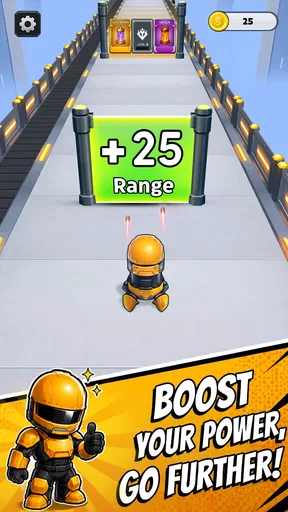
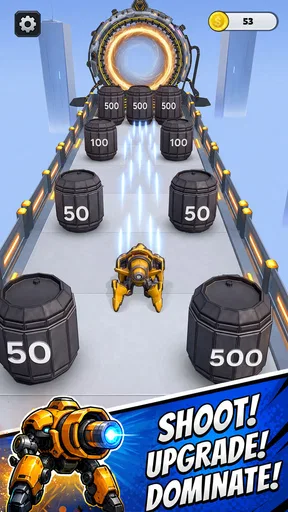
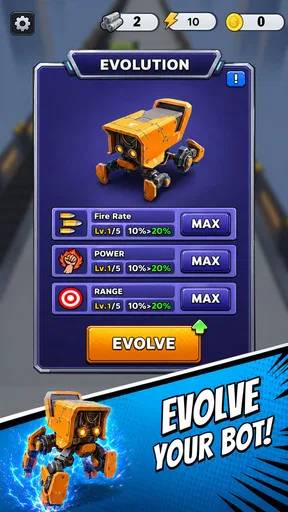
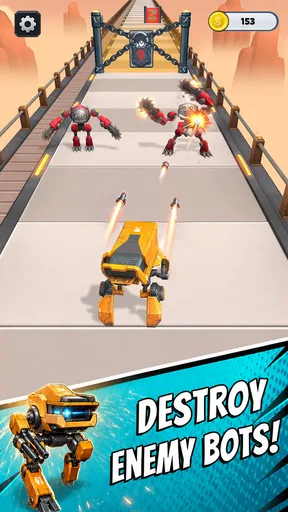
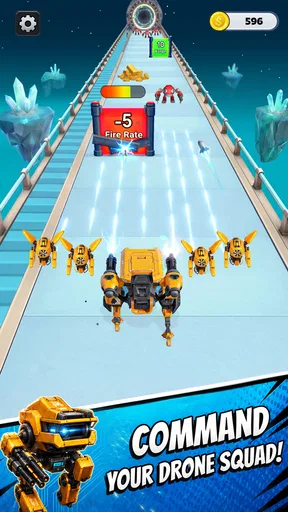
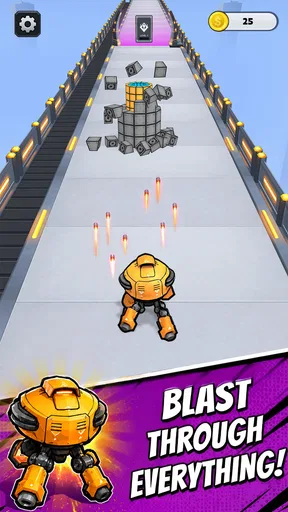
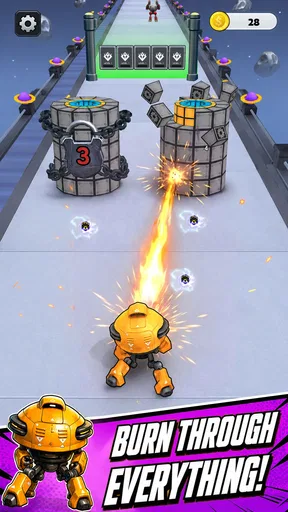
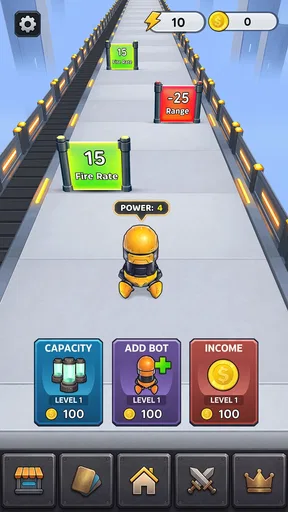
Our Review of Robot Era Evolution
 Analysis by Appyee
I went into Robot Era Evolution expecting a quick action game built around constant movement, and that is exactly where it feels most comfortable. You guide a growing robot force through obstacle-filled runs, make choices about how that force develops, and try to finish with enough strength to feel genuinely unstoppable. It is easy to understand within a few minutes, but its simple premise leaves room for small decisions that matter when a run becomes difficult.
This is a free action game from Bolt Bridge Games, currently at version 0.005. It is rated Teen, works on Android 8.0 and later, and has passed 50 thousand installs. Its average score sits at 3.2 from more than a hundred ratings, which matches my impression that the game has an appealing core but still feels like an early, developing experience rather than a fully polished action title.
How a normal run feels from the first tap
The basic workflow is pleasantly direct. I start a run, move through the hazards, collect or build toward a stronger robot group, and keep my attention on what is coming next. The appeal is not in a complicated control scheme. It comes from the pressure of making quick decisions while the screen keeps moving and the result of a careless choice can weaken the momentum I have built.
That makes it a good fit for short sessions. I can play when I have a few spare minutes without needing to remember a large inventory, a long quest chain, or a complicated set of character abilities. The game communicates its main idea quickly: keep moving, grow the army, and turn that growth into power before the run gets beyond control.
My first useful adjustment was to stop treating every obstacle as something to react to at the last possible moment. The better habit is to look one section ahead and decide whether the immediate reward is worth the risk of entering a bad position. A larger robot group is attractive, but a missed movement can undo the advantage. This is where the action format becomes more interesting than the store summary suggests.
For a casual player, the most comfortable approach is to focus on consistency rather than chasing the biggest possible group every time. A safe route that leaves me with a healthy force is usually more satisfying than a reckless attempt that looks impressive for a few seconds and then collapses. If you prefer action games where every run is readable and the controls are not overloaded, this straightforward structure is one of its strongest qualities.
The everyday use case is short, focused play
I would use this game during a commute, while waiting for an appointment, or as a quick break between longer tasks. It does not ask me to settle into a long story or build a complicated plan before I can enjoy it. The run-based format gives each session a clear beginning and end, which is useful when I want something active but do not want to lose half an hour to a single match.
There is also a nice mental shift between attempts. After a failed run, I can usually identify a practical reason for it: I moved too late, took a poor route, or valued immediate growth over control. That makes restarting feel more purposeful than simply pressing a retry button. The game works best when I use each attempt to refine one habit instead of changing everything at once.
Still, players looking for a deep campaign, a large cast of individually managed robots, or a carefully explained tactical system may find the foundation too light. The action is the main event. It is not trying to replace a full strategy game, and expecting that level of depth would make its simplicity feel like a flaw rather than a design choice.
Settings and device habits worth checking
Because the current version is 0.005, I recommend taking a moment to check the available in-game settings before settling into longer sessions. I pay particular attention to sound, music, vibration, and any control-related options that are exposed. These details can make a bigger difference than expected in a game based on timing, especially if I am playing in a quiet room or using a phone with a smaller screen.
I also prefer to test the controls in a low-pressure run rather than immediately trying to maximize the robot force. The goal is to learn how much movement is needed for a correction and how quickly the game responds. Small overcorrections are easy to make when I am still learning, and the problem can feel like difficulty when it is really unfamiliar handling.
Screen comfort matters here. If the display is bright or the phone is held too close, rapid obstacle reading becomes tiring. I get better results with a comfortable brightness level and notifications silenced for the length of a run. That is not a special feature of the game, but it is a practical way to protect concentration when the action becomes faster or more crowded.
The Teen rating is also worth considering before handing the game to a younger player. Parents should check the experience themselves and decide whether its action style suits the child. I would not treat the rating as a reason to avoid the game automatically, but I would take it seriously rather than assuming that a simple robot theme makes it suitable for everyone.
Repeatable patterns that make runs cleaner
Experienced play is less about frantic movement and more about creating a repeatable rhythm. I try to enter each section with enough space to react, avoid making a sharp change without a clear reason, and keep my attention on the next obstacle rather than staring at the robot count. That last point is important: watching the number grow can be satisfying, but it can also distract me from the path.
One effective pattern is to separate a run into three mental stages. At the beginning, I learn the pace and build safely. In the middle, I protect the advantage instead of taking every tempting opportunity. Near the end, I become more conservative because a late mistake is more frustrating than a modest early result. This approach does not add a new feature to the game; it simply gives the existing loop a clearer decision structure.
I also recommend changing only one behavior after a failed attempt. If I alter my route, timing, and risk level simultaneously, I do not know what actually helped. Instead, I might keep the same general path but delay one movement, or take the same reward while giving the next obstacle more room. That makes improvement easier to notice and prevents the game from turning into random trial and error.
Another useful habit is to treat the robot army as a resource that must survive, not just a score that must rise. Growth is valuable because it supports the later part of the run, but growth without control is fragile. I get more enjoyment when I ask whether a choice improves the whole run rather than whether it produces the largest immediate increase.
Where the free model affects the experience
The game is free to download and play, with optional in-app purchases ranging from $0.29 to $9.99 per item. I would approach those purchases carefully. The most sensible way to judge them is by asking whether they remove a frustration I genuinely have or simply encourage me to skip the learning process. In a game whose satisfaction comes from improving movement and decisions, paying to bypass every difficult moment could reduce the reason to keep playing.
I prefer to spend time with the basic loop first. If I still enjoy the runs after learning the controls and developing a reliable approach, then I can decide whether an optional purchase adds convenience that I actually value. If the game only becomes appealing after spending money, that is a sign to move on rather than treating purchases as a requirement.
This is also where the modest average rating deserves context. A score of 3.2 does not tell me that the game is unplayable, but it does suggest that expectations should be measured. The early version number reinforces that caution. I see a promising, compact action concept, yet I would not recommend it to someone who expects the polish, variety, and depth of a mature premium release.
Advanced limits and who should choose another game
The biggest limitation is the narrowness of the central loop. Building the robot force and surviving obstacles is enjoyable when I am in the mood for focused repetition, but it may become familiar if I need frequent changes of activity. Players who want elaborate customization, competitive rankings, narrative progression, or a broad collection of modes should look toward a more established action or strategy alternative.
I would also skip it if I dislike games that depend on repeated attempts. The experience asks me to learn through failure, and not every run will feel equally rewarding. Someone who wants a predictable, low-pressure experience may prefer a puzzle game or a slower management title. Conversely, someone who enjoys testing timing and refining a route can find enough immediate purpose here without needing a large amount of content.
The current version makes patience important. Early games can change as development continues, but I would not buy the game on the assumption that a particular improvement is guaranteed. I judge what is available now: a compact action loop, accessible controls, and a clear robot-evolution theme, balanced against limited depth and a still-developing finish.
There is a useful distinction between difficulty and friction. Difficulty comes from choosing poorly or reacting late; friction comes from controls, pacing, or presentation making those choices harder to understand. When I play, I try to identify which one I am experiencing. If I keep failing at the same point despite changing my timing, the problem may be that the run is not communicating enough information for my preferred style. That is a reasonable moment to take a break or choose a different game.
My verdict after settling into the rhythm
I recommend Robot Era Evolution to players who want a free, quick action game with a clear objective and a satisfying sense of building momentum. Its robot-army idea gives ordinary obstacle running a useful focus: I am not merely trying to survive, I am trying to arrive at the later part of the run with enough strength to make that survival feel earned.
My recommendation comes with limits. I would not present it as a complete strategy experience or as a polished replacement for larger action games. Bolt Bridge Games has a promising foundation here, but the early version and middling rating make it better suited to curious players who are comfortable with a compact experience and gradual refinement.
The best way to approach it is to play deliberately. Check the controls, keep sessions short at first, protect the robot group instead of chasing every reward, and change one habit at a time after a failed attempt. Those choices reveal the game’s strongest quality: it can turn a very simple premise into a small test of attention and judgment.
For me, the deciding question is whether I want a quick repeatable challenge or a broad game with many systems. When I want the first, I can see myself returning for another run. When I want the second, I would choose a more established alternative. Its appeal is real, but it depends on enjoying focused repetition more than demanding endless variety.
Overall, I see Robot Era Evolution as a worthwhile free download for action fans who like improving through short attempts and do not mind an experience that is still finding its final shape. I would try it without spending money first, learn its movement rhythm, and then decide whether its particular style earns a place among my regular games.
Verdict
Strengths of Robot Era Evolution
- Fun robot battles with a broad variety of upgradeable machines.
- Strategic combat rewards thoughtful team composition and timing.
- Distinct robot designs make collecting new units enjoyable.
- Progression gives players clear goals through missions and upgrades.
- Works well for short play sessions on mobile devices.
Limitations of Robot Era Evolution
- Some upgrades may require significant grinding to unlock.
- Free players can face disadvantages against users who spend money.
- Battles may become repetitive after extended play.
- A stable internet connection is likely required for most features.
- Older devices may experience slower performance during busy fights.
Other Releases by Bolt Bridge Games
View All
Aim Master: Archery Game
Sports4.4
Similar Picks in This Category
View All
Temple Run 2: Endless Escape
Imangi Studios4.1

PUBG MOBILE
Level Infinite4.3

Free Fire: 9th Anniversary
GARENA INTERNATIONAL I4.4

Talking Tom: Hero Dash Run
Outfit7 Limited4.3

slither.io
Lowtech Studios3.9

Sniper 3D:Gun Shooting Games
Wildlife Studios4.6
Frequently Asked Questions
What is Robot Era Evolution about?
Robot Era Evolution is a mobile action and strategy game centered on futuristic robots, combat upgrades, and progression through increasingly challenging encounters. Players generally build and improve a robotic lineup, unlock stronger abilities, and take part in battles that reward planning as well as fast decisions. The appeal comes from combining sci-fi presentation with collectible, upgrade-focused gameplay.
Is Robot Era Evolution free to download and play?
Robot Era Evolution can typically be downloaded without an upfront purchase, allowing new players to try its main gameplay before spending money. However, free-to-play games may include optional in-app purchases for resources, upgrades, cosmetic items, or faster progression. It is worth checking the store listing and the in-game purchase settings, especially if children may use the device.
Does Robot Era Evolution require an internet connection?
An internet connection may be necessary for important features such as account synchronization, online events, advertisements, cloud saves, rewards, and updates. Some portions of the game might work temporarily offline, but this should not be assumed for the complete experience. Players should also expect that connection quality can affect loading times, battle access, and the delivery of progress-related rewards.
Is Robot Era Evolution suitable for children?
The game may be appropriate for players who enjoy robot battles and light science-fiction action, but parents should review its official age rating before installation. Combat, competitive mechanics, advertising, and optional purchases can vary by version and region. If younger players use the app, enabling parental controls and restricting purchases is recommended to prevent accidental spending.
What devices are compatible with Robot Era Evolution?
Compatibility depends on the specific Android or iOS version, available storage, device hardware, and the requirements listed on the official app store page. Because robot battles and animated effects can be demanding, older phones or tablets may experience slower loading, reduced performance, or crashes. Before downloading, confirm the operating-system requirement and keep enough free storage for updates and cached game data.
Play our best games!


